Breakpoints

No Retina
Retina
XS Screen (480px)
SM+ Screen
SM Screen (768px)
SM- Screen
MD+ Screen
MD Screen (992px)
MD- Screen
LG+ Screen
LG Screen (1200px)
LG- Screen
XL+ Screen (1600px)
Short Display Name
Para Alpine

Everything You Need To Know About Para Alpine Skiing

By U.S. Ski & Snowboard
May, 30 2023
Para alpine athlete
An athlete competes in a downhill race last season. (United States Olympic & Paralympic Committee)

Here’s a breakdown of the events and the classifications featured in Para alpine skiing.

By Luke Hanlon // Red Line Editorial

When the first Winter Paralympics took place in 1976 in Örnsköldsvik, Sweden, alpine skiing was one of two sports on the program, along with cross country skiing. Only standing skiers competed and they raced only in slalom and giant slalom at those Games.

Over the years, events were added for sit skiers and visually impaired skiers, and the program was expanded to include the five races familiar to fans of alpine skiing at the Olympic or World Cup level. As in Olympic skiing, the goal is to navigate a course by skiing around gates and crossing the finish line in the fastest time.

Here’s a breakdown of the events and classifications that make up Para alpine skiing competitions. 

Events

Slalom

The most technical of all alpine events, the slalom is all about having the agility to make quick, tight turns. Slalom features the shortest courses, but it has the most gates to pass through. Skiers compete over two runs on two differently set courses over one day to determine the winners.

Giant Slalom

It’s the slalom, but bigger and faster. However, even though the course is longer than a slalom course, it features fewer gates to pass through. Skiers like Thomas Walsh, who won silver in the giant slalom at the 2022 Games, compete in two runs on two different courses. The times are combined to determine the winner.

Super-G

Considered a speed event, super-G is faster than giant slalom while a little more technical than the downhill. Laurie Stephens showed her elite combo of speed and technical ability when she won gold in the super-G at the 2006 Paralympics. There is just one run in super-G and athletes can only inspect, or “slip,” the course prior to the race. 

Downhill

The fastest of the alpine races, skiers can reach speeds over 60 miles per hour while competing in the downhill. Downhill courses are steep and long and feature wide turns, all of which allow skiers like 2018 Paralympic downhill gold medalist Andrew Kurka to really get movingSkiers complete one run down the course, with one training run down the course prior to the race.

Alpine Combined

Intended to test athletes for both their speed and technical ability, this event is made up of two runs — one run of either downhill or super-G and one run of slalom. The two times are combined to determine the winner.

Classifications

Alpine skiers are separated into three groups: sitting, standing and visually impaired skiers. There are additional classifications within each group that skiers compete under.

Those classifications are in place because there are athletes with varying severity of impairments competing in the same race. Times are adjusted accordingly based on classifications to make sure each race is fair for all the athletes.

Standing skiers have nine different classifications, since there are athletes with either upper or lower limb deficiencies. There is even one classification for athletes that have impalements to upper and lowers limbs.

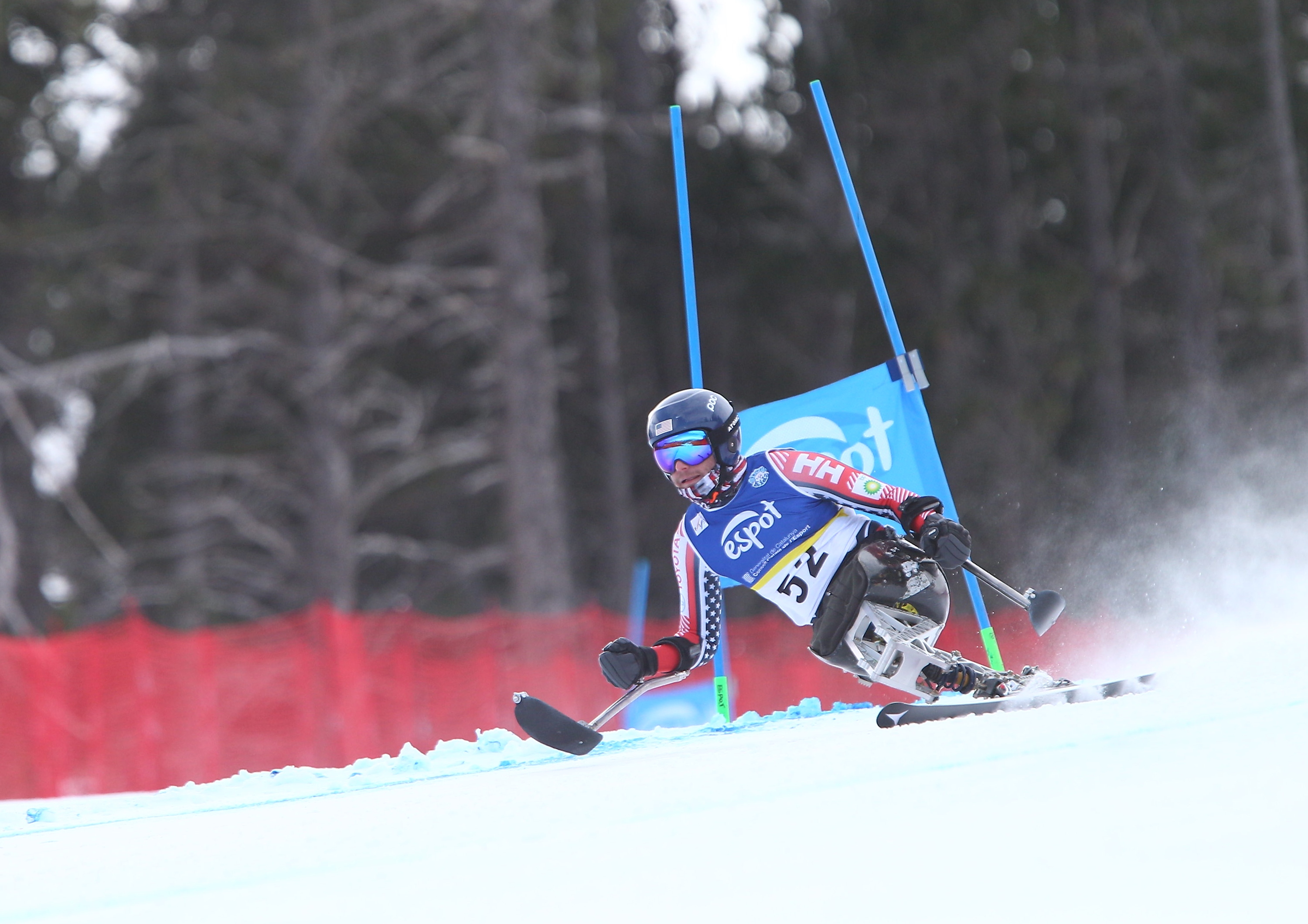
Sitting and visually impaired skiers each have three separate classifications. Sitting skiers only have lower limb deficiencies. Like the name suggests, sit skiers compete in sleds — also called monoskis — in a seated position.

Visually impaired get classified based on their levels of vision. These skiers each compete with a sighted guide that verbally communicates to navigate them down a course.

Luke Hanlon is a sportswriter and editor based in Minneapolis. He is a freelance contributor to usskiandsnowboard.org courtesy of Red Line Editorial, Inc.
Athlete Age Classifications by Sport

All U.S. Ski & Snowboard members turning 17 years of age during the season, or older, are required to complete one or more of the following online requirements.

  • SafeSport Training
  • Background screening

Please note, Background Screening is required every two seasons and SafeSport training, is required every season.

Short-term members and those alpine masters who are not in regular contact with or in a position of authority over athletes are excluded from these requirements.

FIS Registrations

This section provides FIS applications for competitors participating at the FIS level who DID NOT purchase a FIS license through online registration. STOP! Please DO NOT complete the following FIS application if you have not renewed for the 2025-26 season! Please DO NOT complete the following FIS application if you already purchased/renewed your FIS license during U.S.

U.S. Ski & Snowboard Announces the Integration of U.S. Paralympic Alpine and Snowboard Teams

By U.S. Ski & Snowboard
May, 22 2023
para
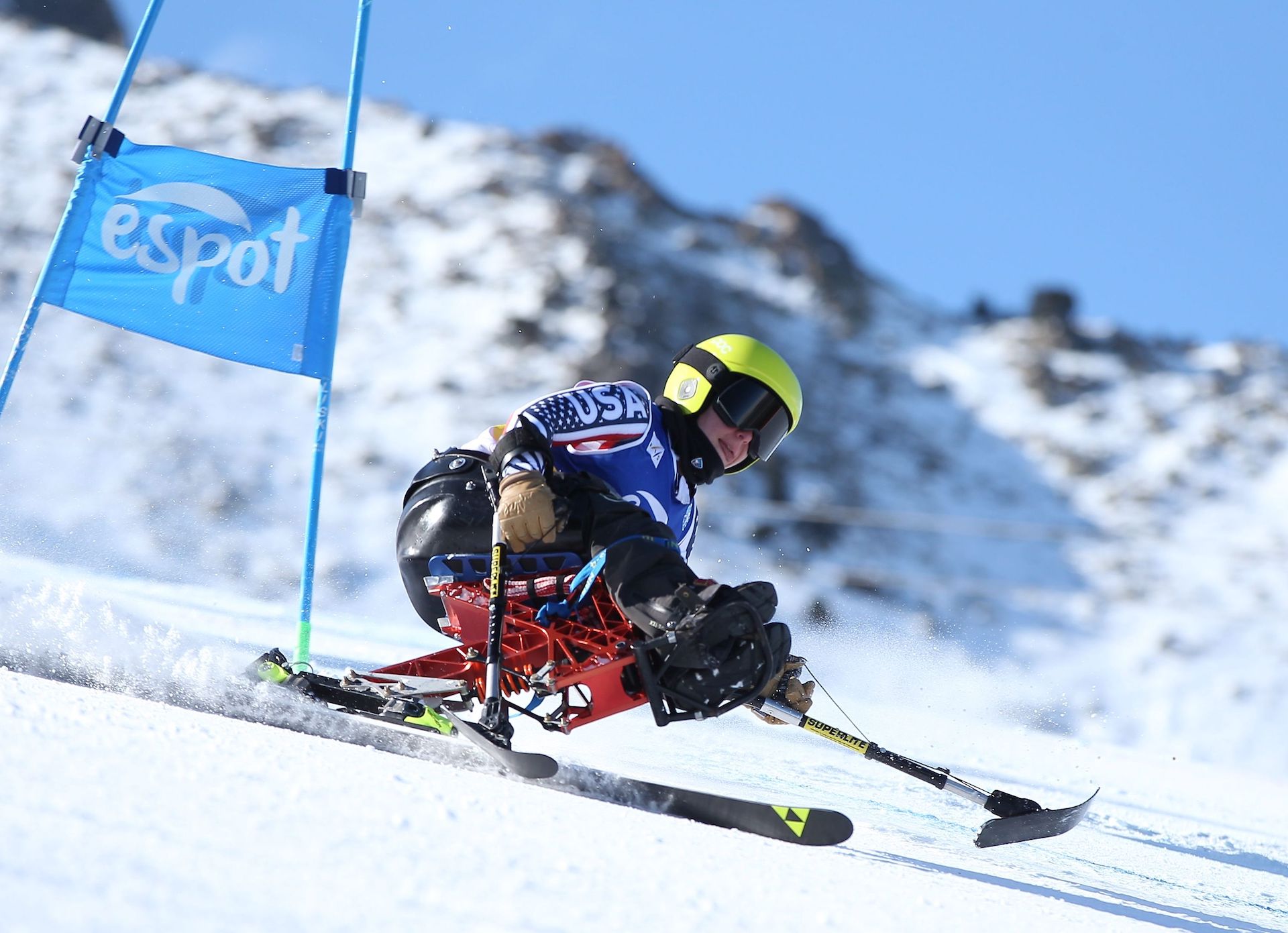
U.S. Para Alpine Ski Team Athlete Saylor O'Brien races in super-G (U.S. Ski & Snowboard/U.S. Olympic & Paralympic Committee)

Park City, UT (May 23, 2023) – U.S. Ski & Snowboard, the National Governing Body for skiing and snowboarding in the United States, is proud to announce the official integration of the U.S. Para Alpine Ski Team and U.S. Para Snowboard Team onto its roster. This historic move marks a significant step forward in promoting inclusivity and equal opportunities within winter sports and underscores the One Team mindset. 

Since the U.S. Olympic & Paralympic Committee (USOPC) took over the management of Para alpine skiing in 2010, the U.S. Ski & Snowboard organization has been committed to creating a more unified approach to snow sports. The integration of the U.S. Para Alpine Ski Team and U.S. Para Snowboard Team into the U.S. Ski & Snowboard landscape further solidifies the organization's dedication to providing comprehensive support and resources to all athletes, including elite coaching, sport science, sports medicine, high performance staff and education opportunities, along with access to the USANA Center of Excellence.

With this move, the U.S. Ski & Snowboard Team welcomes a remarkable group of Para athletes who have excelled in their respective disciplines. Among the key athletes on the U.S. Para Alpine Ski Team are seven-time Paralympic medalist Laurie Stephens and two-time Paralympic medalist Andrew Kurka. In the realm of Para snowboarding, some of the winningest athletes in the sport will continue to represent the United States, including three-time Paralympic champion Brenna Huckaby, three-time Paralympic medalist Mike Schultz and two-time Paralympic medal winners Keith Gabel and Evan Strong.

“The integration of our internally managed Para alpine and snowboard teams within U.S. Ski & Snowboard is a monumental step for inclusion, development and growth of the sports,” said Julie Dussliere, the U.S. Olympic & Paralympic Committee’s Chief of Paralympics & Internally Managed Sports. “We believe the governance transfer will serve as an important model for more National Governing Bodies to follow in the years to come.”

“These individuals have consistently showcased their extraordinary talent on the international stage, earning admiration and respect within the snow sports community and I am thrilled to welcome them onto our team here at U.S. Ski & Snowboard,” said Sophie Goldschmidt, President and CEO of U.S. Ski & Snowboard. “With these athletes on the team, we will continue to see more success on the world stage.” 

The U.S. Para Alpine Ski Team has consistently brought home numerous medals from the Paralympic Games and annual World Championships, showcasing their excellence on the slopes year after year. In 2018, the United States won a dominating six total medals, one gold, three silver, two bronze, and picked up another medal at the Beijing Paralympic Games. 

The U.S. Para Snowboard Team has also achieved remarkable success, with its athletes earning numerous Paralympic medals. At the 2018 Paralympic Winter Games in PyeongChang, South Korea, Team USA won 13 medals, five gold, five silver and three bronze, showcasing their dominance on the world stage. In 2022, the U.S. grabbed four medals, one gold, two silver and one bronze, with Brenna Huckaby tying the record for the most career Paralympic snowboard golds.

The teams will be helmed by newly named Para Sport Director Erik Leirfallom. Leirfallom comes to U.S. Ski & Snowboard from Park City’s National Ability Center, where he has been the High Performance Para Alpine Race Coach since 2016. Prior to the NAC, he was the Alpine World Cup Race Director for the International Paralympic Committee and was a coach for the U.S. Para Alpine Ski Team from 2007-10, working with the team that won 11 Paralympic medals in Vancouver and the team’s first Nations Cup victory.   

“The integration of the U.S. Para Alpine Ski Team and U.S. Para Snowboard Team into the U.S. Ski & Snowboard organization's roster signifies a significant milestone in advancing inclusivity within winter sports,” said Anouk Patty, U.S. Ski & Snowboard Chief of Sport. “By combining the management and resources for both the able-bodied and Para teams, we aim to enhance training programs, talent identification and grassroots development initiatives for all athletes.”

The U.S. Ski & Snowboard organization officially integrates the U.S. Para Alpine Ski Team and U.S. Para Snowboard Team onto its roster effectively immediately, fostering a new era of unity and excellence in winter sports. 

FOLLOW THE U.S. PARA ALPINE SKI TEAM & U.S. PARA SNOWBOARD TEAM

Instagram: @usparaskisnowboard

Facebook: U.S. Para Alpine Ski & Snowboard Team

Twitter: @usskiteam

TikTok: @usskiandsnowboard